Stories

  • Co-ordinating classic chairs

    Timberline Furniture commenced operations in Perth WA with the factory being located in Willetton. The furniture manufacturing business was founded by Ron Jones and Hedley Van Der Straaten in the early 70’s and ran through to the mid 90’s with about 10 – 12 staff. Ron was a Wood-Turner by trade and managed operations with Hedley managing sales and general business. Timberline predominantly manufactured dining furniture but also made some lounge and occasional furniture. During the 80’s they entered into a collaborative venture with co-ordinated designs, Trustyle Furniture making the lounge suites, George’s Cabinets making the cabinetry and Timberline the dining suites. These co-ordinated furniture ranges were sold by furniture retailers throughout W.A.     

    Our clients were involved in furniture retailing and furniture transport for many decades and contacted us to re-upholster their Timberline ‘Captain’s Chairs’. These were a very popular occasional chair from the late 70’s and early 80’s not just in residential sales but they were also used in commercial hospitality applications.

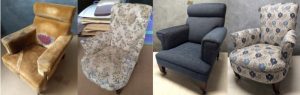
    The chairs were originally upholstered in a Nylex ‘Deerhide’ vinyl which was a quality product in its days so we advised using a vinyl from the Austex ‘Studio’ as a quality replacement. The existing upholstery was completely removed, then the show-wood frames cleaned and polished. New high density foam was laminated onto the padded areas and the chairs were upholstered to the original finish with piped and space studded detail.

    Our clients re-upholstered ‘Captain’s Chairs’ looked in place around their bar with complimentary comments passed over a few drinks.
  • Re-upholster antique chair in linen

    The use of different upholstery materials can totally transform the appearance of a chair. You may have inherited a chair or just have seen an antique chair where you admire the design but have to use your imagination regarding a suitable fabric for re-upholstery which would suit your décor.  In this situation take your time to investigate the possibilities and possibly consult with an upholsterer experienced in this area of work.   

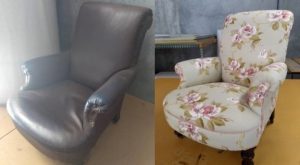
    A client came to see us from the South West farming town of Boyup Brook as they had inherited chair from the United Kingdom made in the 1880’s. This chair had sadly resided in their shed for many years and was in a dilapidated state having been previously in leather. They wanted this chair to be re-furbished for their bedroom so a Heritage Linen with a matching soft pink cotton velvet for piping.

    The existing upholstery was completely stripped to the frame then structural repairs carried out and the legs re-polished. We then fitted jute webbing, laced and tied down coil springs with hessian overlays. The shapes were then developed utilising modern polyurethane furniture edging instead of fibre fill stitched edges and premium high density foam instead of the traditional flock and fibre. We feel that using this combination of traditional and modern methods of building the upholstery foundation gives an authentic finish with superior comfort.

    The chair was then upholstered a high quality screen printed vat dyed linen with a matching pink cotton velvet piping. This gave a softer appearance to the chair which was required by our client. This chair having been constructed in the 1880’s was now rejuvenated by descendants of the original owners and functional in 2019!

    Call us Today
  • Re-upholster Charles Mackintosh chair

    A client approached us saying they had a ‘Mackintosh’ chair in desperate need of re-upholstery. They had purchased this lounge chair in the UK in the 1970’s and it had just been re-upholstered, they were told it was made about 1910 and was a Charles Rennie Mackintosh (1868 – 1928) design reflecting the ‘Arts and Craft’ period.

    Charles Rennie Mackintosh was a Scottish architect and designer who played an important role in the turn of the century ‘Arts and Craft’ movement. He became interested in architecture at a young age and enrolled into the Glasgow School of Art at fifteen meeting the McNair children (marring one of the sisters). The foursome collaborated becoming renowned for their refined stylization of furniture. In 1889 Mackintosh became an apprentice at the architectural firm Honeyman Kreppie and was made a partner in 1901. He demonstrated a break from traditional Victorian design being influenced by Japanese and Celtic art. He was famously commissioned by Catherine Cranston to design the Willow Tearooms (Glasgow) interiors and furniture for which he developed the famous Argyle chair.

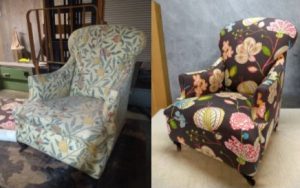
    We completely stripped the upholstery to the frame on this chair and judging from the construction techniques it coincides with the period. The chair was then re-sprung and completely re-upholstered being covered in a linen supplied by our clients.

    There is however something extremely strange regarding this chair? The construction techniques coincide with the with the ‘Arts and Craft’ period and the design coincides with the Mackintosh style of the period however from our research he never designed a fully upholstered lounge chair, only dining and occasional chairs with a few show-wood framed lounge chairs. Our client loved their rejuvenated chair and the mystery remains!

    Call us Today