Stories

  • Re-upholster antique chaise lounge
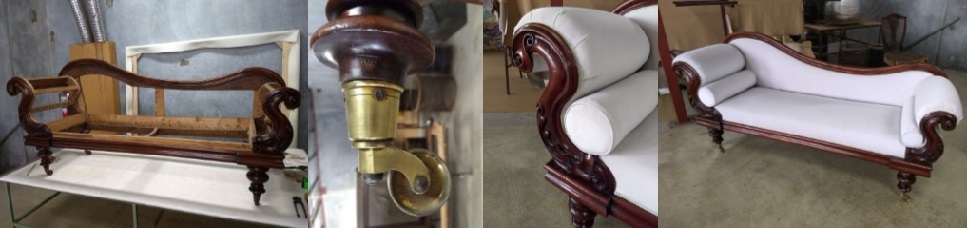
    When given a restored antique chaise lounge frame to re-upholster the problem is that there may have been many different ways it was traditionally upholstered. Therefore the method of upholstery depends upon the client’s interpretation on how the furniture appeared originally combined with the restorer’s knowledge and research into period pertaining to this style of furniture.   

    This antique chaise lounge frame was given to us by a client who wanted it upholstered for her bedroom. Apparently this piece originated from the 1880’s and she did not want any deep buttoning in the upholstery. We went through much archival material on chaise lounges from this period and found examples of similar double ended pieces from this period with plain upholstery which coincided with our client’s expectations. Above all our client also wanted the re-upholstered chaise to be comfortable giving us considerable autonomy regarding upholstery methods.

    We set about our task and first cleaned and repaired the original castors. We then webbed the base with heavy weight jute webbing, laced in the coil springs, tied them down then fitted a hessian overlay. We then used synthetic furniture edging and built the seat, back and scroll ends up with varying hardness’s of high density cushioning encased with bonded polyester fibre. The result of building up the platforms this way is that the traditional look is maintained however unlike the furniture from this era comfort has not been sacrificed for style. The upholstery was trimmed with matching gimp trim creating a superb finish.

    Our client was elated with the stylish finish of her re-upholstered antique chaise lounge but was equally impressed with the comfort which would not have been such a necessity in the bygone days. We trust our client will enjoy and relax on her rejuvenated chaise lounge for many years.
  • Re-styled 1940’s chairs

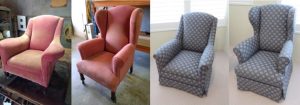
    Occasionally clients are unhappy with the style of the chairs presented to us for repair and re-upholstery. This can be as a result of either initial design flaws, poor re-upholstery or poor reconstruction as a result of previous damage or sometimes a combination of these factors. The idea is not necessarily to bring a chair back its purest original form but occasionally compromise with slight re-styling to compliment the client’s décor.

    These two 1940’s chairs were presented to us by a client as they had been passed down to her through the family. She wanted the chairs to be re-upholstered however she wanted the arms modified on one chair and the wings to be altered on the other chair. This re-styling was required partially due to initial design flaws but also due to past re-upholstery exaggerating these flaws.

    We completely stripped the existing upholstery on both chairs down to the bare frames. The top arms on one chair were then cut down to a cigar shaped arm in keeping with the design while the other chair had a plywood strip removed from the inside wings which improvised as a thumb roll. The two modified chair frames were then re-upholstered using a combination of traditional and contemporary methods.

    When these re-styled chairs were delivered to our client she was ecstatic with the outcome. We trust the chairs will be enjoyed and continued to be passed down to future generations.

    Call us Today
  • Refurbish TV Chairs & Daynite sofa

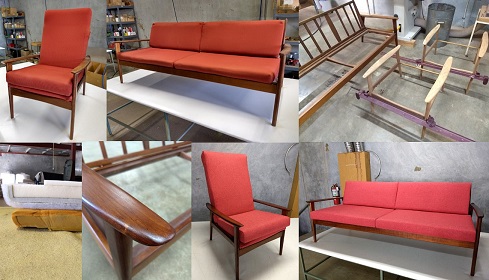
    “TV chairs” and “Daynite sofas” became popular from the late 1950’s and remained in production through to the early 1970’s. This coincided with the introduction of television and the modern appliance age. Today we generally refer to TV chairs and Daynite sofas as mid-century furniture which has regained popularity amongst novices and enthusiasts of this era. This furniture setting was made in W.A. by Condor Furniture in Osborne Park owned by the Trethowan family.

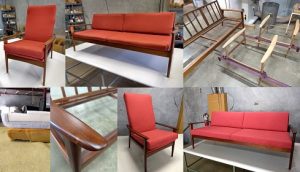
    This set of TV chairs and Daynite sofa were presented to us by our client who wanted them completely refurbished to original condition. The existing upholstery was striped to the frames then the frames sanded back to raw timber. The timber frames were constructed from Nyatoh, a Malaysian timber which is ideal for this type of furniture. The frames were then stained brown teak and three coats of clear lacquer applied.

    The new upholstery started with replacing the no-sag springs then fabricating polyester encased premium cushion inserts. The upholstery fabric selected was similar to the original covering being a flat woven rust coloured fabric.

    The result was a refurbished classic mid-century lounge setting that took our clients back to the time of their initial purchase. We have no doubt that just as nostalgic memories will be relived good times are still to come for our clients to enjoy their furniture.

    Call us Today