Re-furbish Australian styled ‘Club Lounge’

By Frank Parker

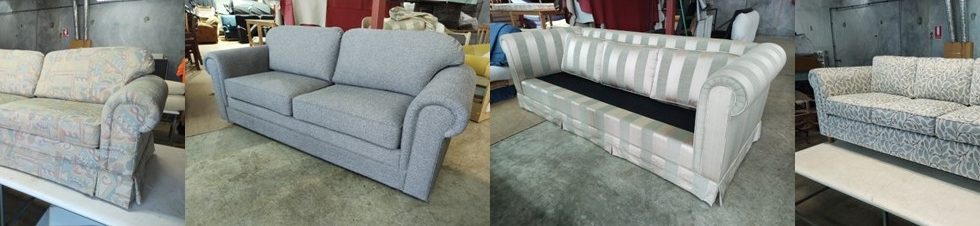
Perth Reupholstery Club Lounge

The Classical Club Lounge

What we generally recognise as Australian styled ‘club lounges’ were made from the late 1920’s through to the mid 1950’s. This design was not uniquely Australian however it was very popular during this era and the suite featured is typical of this period however many variations were available.

 These suites all featured the wide arms with timber trays and bases but some also decorative timber trim on the arm facings. The upholstery finishes were also available in a wide variation of finishes. This included cord trim, contrast piping and raised panel patterns on the backs.

Our Client’s Request

We were requested to completely re-furbish this ‘club lounge’ by a client who inherited this furniture from her parents but which originally belonged to her grandparents. This lounge suite was made in the late 1940’s and then re-upholstered in the 1970’s so it was in a dilapidated condition when received for refurbishment.

  • We completely stripped the existing upholstery to the frame
  • The frame was well constructed using thick Jarrah timber
  • We screwed all the joints to eliminate any potential movement
  • We sanded back the timber arm trays and base blocks
  • Then polished the Jarrah leaving a natural finish
  • The suite was then re-upholstered using the traditional jute webbing, coil springs and hessian for the seat and back bodywork
  • For comfort and practicability we then use premium cushioning for the base, back and arm overlays also polyester encased premium seat cushion inserts.

Combining the traditional and modern upholstery techniques gives an authentic finish but provides practical and comfortable seating.

In rejuvenating this classic Australian styled ‘club lounge’ our clients will be able to cherish their family memories into the future.

See more of our high quality reupholstered furniture here.
Similar Posts

  • Re-upholster antique chaise lounge

    When given a restored antique chaise lounge frame to re-upholster the problem is that there may have been many different ways it was traditionally upholstered. Therefore the method of upholstery depends upon the client’s interpretation on how the furniture appeared originally combined with the restorer’s knowledge and research into period pertaining to this style of furniture.   

    This antique chaise lounge frame was given to us by a client who wanted it upholstered for her bedroom. Apparently this piece originated from the 1880’s and she did not want any deep buttoning in the upholstery. We went through much archival material on chaise lounges from this period and found examples of similar double ended pieces from this period with plain upholstery which coincided with our client’s expectations. Above all our client also wanted the re-upholstered chaise to be comfortable giving us considerable autonomy regarding upholstery methods.

    We set about our task and first cleaned and repaired the original castors. We then webbed the base with heavy weight jute webbing, laced in the coil springs, tied them down then fitted a hessian overlay. We then used synthetic furniture edging and built the seat, back and scroll ends up with varying hardness’s of high density cushioning encased with bonded polyester fibre. The result of building up the platforms this way is that the traditional look is maintained however unlike the furniture from this era comfort has not been sacrificed for style. The upholstery was trimmed with matching gimp trim creating a superb finish.

    Our client was elated with the stylish finish of her re-upholstered antique chaise lounge but was equally impressed with the comfort which would not have been such a necessity in the bygone days. We trust our client will enjoy and relax on her rejuvenated chaise lounge for many years.

    Call us Today
  • Restoration of Club Lounge

    Reupholster Club Lounge Perth

    What we generally recognise as Australian styled ‘club lounges’ were made from the late 1920’s through to the mid 1950’s. This design was not uniquely Australian however it was very popular in Australia during this era and the suite featured is typical of this period however many variations were available.

    These lounge suites all featured the wide arms, usually with timber trays and bases but some also had decorative timber trim on the arm facings. The upholstery finishes were also available in a wide variation of finishes. This included cord trim, contrast piping and raised panel patterns on the inside backs.

    A client approached us who is from a prominent furniture manufacturing family to restore their ‘club lounge’. This club lounge was not a family heirloom but a design from the era they had always found interesting and destined for their retirement home. It is always an honour to be asked by a contemporary to restore a favourite piece of furniture however the expectations are always as equally high.

    We stripped the 3 seater and 2 chairs down to the bare frames, removed the show-wood components then screwed the joints together. The timber arm trays were so badly damaged leaving us with no option than to completely replace them however the front base strips were sanded back and re-used have receiver three coats of lacquer.

    The bases and backs were re-webbed with jute webbing then the coil springs laced in, tied down and covered with heavy weight hessian. We then used synthetic ‘thumb roll’ to build up the edges and laminated layers of premium foam over the bases, arms and inside backs until the desired shapes were achieved. Flutes were sewn into the inside back covers and the suite was trimmed with contrast piping. The seat cushion inserts were fabricated by laminating various densities of premium foam then encasing them with bonded polyester fibre. The outside arms and outside backs were all lined padded providing a superior finish.

    The result was that we had brought furniture made about 80 years ago back to life. We trust the new owners will receive many years of enjoyable use of their furniture. However from a trade persons perspective we often wonder, what would those who originally made the furniture think of it now?

    Call us Today
  • Restoring Fler Chairs

    Fred Lowen and Earnest Rodeck met on a refugee ship escaping Nazi Europe bound for Port Melbourne. Fred Lowen started work in 1942 as a fitter and turner but woodturning was his passion. The two commenced their business in 1946 under the acronym FLER starting in an old stable.

    The business grew quickly as they engaged with Myer Emporium supplying modern designs with turned legs and Scandinavian influence. By the mid-late 1960’s Fler had manufacturing operations is several states. The massive demand for this style of furniture in Australia was created by the post-war residential boom in modern housing.

    A couple were referred onto us as they had two Fler SC55 chairs produced in the late 1950’s and two E31 chairs from the 1960’s requiring complete restoration. They originally were purchased new by her parents but unfortunately were very poorly ‘restored’ by a supposedly reputable business in the 1980’s. Given this we had to completely strip the chairs back to the raw timber frames with the intention of restoring them to their original splendour.

    With the frames completely sanded back the timber was stained Mahogany then three coats of clear lacquer. The cushion inserts were originally latex rubber however premium polyurethane foam encased with bonded polyester fibre is more durable and provides superior comfort. We re-upholstered the chairs in a velvet using the original finishing methods resulting in glowing fine lines.

    Our clients were astounded with the result taking her back remembering the chairs in bygone years. This work also provides great pleasure for us as furniture manufacturers and restorers.

    Call us Today
  • Vince’s Upholstery – Reupholster

    We had previously reupholstered a Parker-Knoll 60’s wing back chair for a client who then requested us to reupholster two 2 ½ seater settees purchased in the early 80’s made by Vince’s Upholstery.

    Vince’s Upholstery was founded by Vince and Pina Scalisi who originally started the business from their home in East Perth making budget priced furniture. They progressed over time and became renowned for manufacturing top end custom-made lounge furniture from a purpose built factory in Morley.

    Our clients presented us with two identical looking 2 ½ seater settees however when we removed the fabric it became obvious they were purchased at different times as one settee featured a traditional sprung edge and the other a fabricated foam edge with different springs. The challenge was to reupholster the two settees so they both felt identical for comfort.

    We re-webbed the seats and fitted new coil springs of the same height and gauge then fabricated a foam edge on one settee to replicate the sprung edge of the other. We also replaced all existing hessian and body padding however the down and feather cushion inners were still in good condition so we encased these in 200g boned polyester fibre. The settees were reupholstered to the original finish in a cotton velvet then delivered to very happy clients!

    Call us Today
  • Oliver’s Upholstery

    Oliver’s Upholstery was founded by Andrew Oliver in the late 1980’s being situated in Perth Western Australia. The business manufactured economically priced upholstered furniture for the WA retail sector. The business grew quickly becoming one of the larger upholstery manufacturers by volume in the State. However about a decade of operation cheap inferior products started coming into Australia from Malaysia and Thailand then flooding in from China.

    With the value area of the local market being displaced with imported furniture Andrew Oliver changed directions renaming the business Oliver’s Re-upholstery focusing on re-upholstery and commercial upholstery.

    Long term clients approached us when renovating their home wanting to have two wing back chairs re-upholstered. These clients resided in a leafy Perth suburb and thought the chairs were rather special but it’s difficult to explain to such clients that their taste in furniture maybe a bit ordinary, especially if they want the chairs re-upholstered in a high quality leather.

    The upholstery was rather tacky so we stripped the chairs back to the bare frames and were rather surprised that the frames were soundly constructed. We sprung the frames, laminated the body work with high density foam padding slightly redesigning the upholstery. The leather was a full-aniline leather from Tasman Tanning and was a pleasure to use as the chairs took shape. Using more traditional labour intensive upholstery techniques paid off as displayed by the finished product.

    Our clients were simply “gob-smacked” with their re-upholstered wing back chairs which just goes to show that you can make a silk purse from a sow’s ear!

    Call us Today
  • Re-upholster Charles Mackintosh chair

    A client approached us saying they had a ‘Mackintosh’ chair in desperate need of re-upholstery. They had purchased this lounge chair in the UK in the 1970’s and it had just been re-upholstered, they were told it was made about 1910 and was a Charles Rennie Mackintosh (1868 – 1928) design reflecting the ‘Arts and Craft’ period.

    Charles Rennie Mackintosh was a Scottish architect and designer who played an important role in the turn of the century ‘Arts and Craft’ movement. He became interested in architecture at a young age and enrolled into the Glasgow School of Art at fifteen meeting the McNair children (marring one of the sisters). The foursome collaborated becoming renowned for their refined stylization of furniture. In 1889 Mackintosh became an apprentice at the architectural firm Honeyman Kreppie and was made a partner in 1901. He demonstrated a break from traditional Victorian design being influenced by Japanese and Celtic art. He was famously commissioned by Catherine Cranston to design the Willow Tearooms (Glasgow) interiors and furniture for which he developed the famous Argyle chair.

    We completely stripped the upholstery to the frame on this chair and judging from the construction techniques it coincides with the period. The chair was then re-sprung and completely re-upholstered being covered in a linen supplied by our clients.

    There is however something extremely strange regarding this chair? The construction techniques coincide with the with the ‘Arts and Craft’ period and the design coincides with the Mackintosh style of the period however from our research he never designed a fully upholstered lounge chair, only dining and occasional chairs with a few show-wood framed lounge chairs. Our client loved their rejuvenated chair and the mystery remains!

    Call us Today