Club Lounge Restoration

By Frank Parker

Restoring an Australian Club Lounge is to a furniture manufacturer as what restoring a Holden or Falcon car is to a mechanic. Various versions of this Club Lounge style were produced in Australia from the late 1920’s through to the late 1950’s. There is a special place in our hearts for this type of lounge and we always welcome the challenge when being tasked with another Club Lounge restoration.

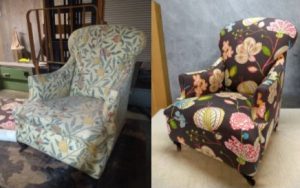
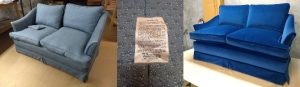
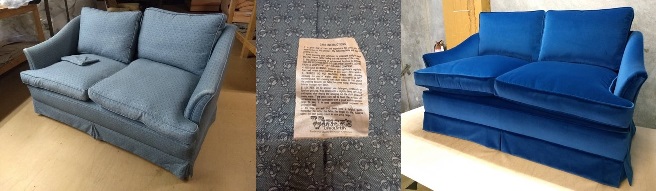
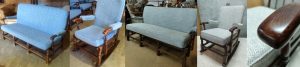
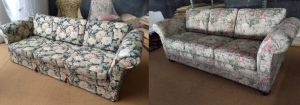
A young lady from Geraldton approached us regarding restoring a club lounge originally belonging to her grandparents from a farm in Mullewa which had been stored in a sheering shed for several decades being home to the resident rodents. Her parents who had since run the family farm for many years transported the lounge suite to the factory then upon arrival we could see it was basically in good structural condition and still partially covered in the tattered original upholstery fabric.

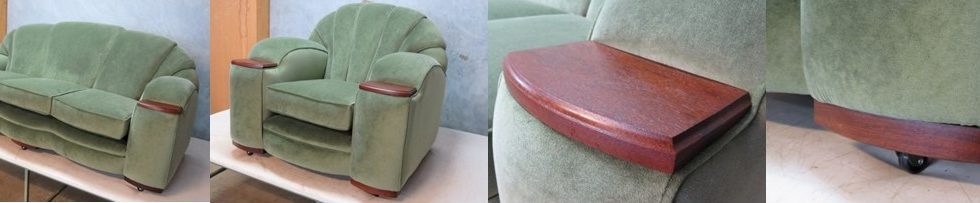
We removed all the upholstery stripping the lounge suite down to the bare frame. The frame joints we then partially knocked apart and re-glued with a crosslinking PVA and then screwed. The timber trays and base blocks sanded back with the cracks and dents being filled with two-pack resin. They were then finely sanded and given three coats of clear lacquer.

The upholstery started with fitting heavy weight jute webbing, lacing in the coil springs then tying down the springs and fitting hessian overlays. We then fitted synthetic edge trim and laminated high density foam to the bodywork. The back flutes were fabricated from premium foam then encased with bonded polyester fibre back to the original shapes. The seat cushions were fabricated using the same method and the outside arms and backs were all lined and padded. The fabric covering was a ‘W’ pile velvet suitable for heavy use with the upholstery finish detailed back to original finish.

Our client was elated upon receiving her re-upholstered furniture with a comment from her parents on our Instagram “who is a lucky girl” which said it all!
Similar Posts

  • Reupholster Art Deco Chairs

    From our understanding these chairs were made in Czechoslovakia in the late 1920’s, manufacturer unknown. For their time the construction techniques used are quite advanced utilising a ‘push-in seat’ and back flutes located with spring-edge wire. However the most significant thing about these chairs is the general proportion and balance of the design.

    A client contacted us saying that she had acquired two art deco European chairs requiring restoration. Upon initial inspection we found the chairs had been shabbily re-upholstered and covered in decades of grime. As we stripped away the fabric on these chairs it exposed some of the original upholstery providing enough information for an authentic reconstruction.

    The first step was several construction repairs to the timber frames then removing the layers of grime. The show-wood components of the frames were then gently sanded back, stained a mid-tone Oak then three coats of clear lacquer. Then with the upholstery we re-constructed the sprung edge seats and backs by lacing in the springs, fabricated the spring edge wire and tying down the springs. We then sewed on the hessian overlays and ring-clipped on polyurethane edge moulding. The seats and backs were then layered with premium foam and polyester overlays. The client’s fabric selection suited the chairs and was practical to upholster. The panels were cut being carefully pattern matched then largely pre-sewn but requiring some hand stitching.

    The re-furbishing of these chairs combined traditional methods with modern materials however did not compromise the design integrity. Our client was overjoyed with the result and the chairs now take pride of place in her lounge room.

    Call us Today
  • Restoration of Antique Chairs

    Genuine fine antique chairs become scarcer as time ticks on due to fatigue with function and unnecessary destruction. Poor and inappropriate furniture repairs due to operators not possessing the necessary skills also increase the scarcity. It is important to always use a reputable and skilled restorer.

    Our client approached us with a dining chair from the 1880’s which was bequeathed to her by her maternal grandmother as one was for each granddaughter. After receiving the chair she had it repaired and re-upholstered however within a short time with only gentle use the lower back carved section again broke away. The chair remained in her lounge room as a decorative piece for several decades but constantly annoyed her until we were presented with the repair and re-upholstery task.

    The lumbar carved section had broken away for two reasons; only an average quality PVA glue had been used for the repair and where the timber had fractured there was burl grain so it was originally flawed. We chipped away the remaining burl timber then stage by stage rebuilt the carved section in question using two-pack epoxy resin. Each section was masked-up and filled with resin then sanded into shape. After this was completed the re-built section was stained to match the remaining timber work.

    The existing upholstery was then completely removed with new jute webbing being fitted, coil springs then laced in and tied down and a hessian overlay fitted. A synthetic thumb roll was then fitted to the seat edges and filled in with high density premium padding then a bonded polyester overlay. The chair was then upholstered in a black cut pile cotton velvet and finished with twin piping. This method reduces the cost for our client but also creates a usable and durable seat however not authentic of the period.

    Our client was elated with the finished result especially because the chair would once again become a functional piece of furniture.

    Call us Today
  • Interesting Mid Century Furniture

    mid century modern furniture restoration

    When clients show us furniture that is in need of restoration we sometimes come across some very interesting furniture pieces. This mid century chair and footstool manufactured by Westnofa Furniture Company, is one such piece.

    Westnofa furniture is one of the great success stories of the Norwegian furniture industry. The name was derived from the combination of WEST NOrway FActories and was formed in the late 1950’s by a collaboration of the country’s leading furniture manufacturers. The goal was to combine forces to market and export locally produced furniture.

    This mid-century chair and footstool were in a dilapidated condition when received at the factory for rejuvenating. The furniture frames that were still assembled were carefully knocked apart, the joints were cleaned up and the pieces individually sanded before being re-assembled with the fractured components using a two-pack resin. The wood frames were then lightly sanded, stained light walnut, received three coats of lacquer between sanding and then finished off with a rub down using super fine steel wool.

    The chair and footstool plywood shells were stripped of the old latex rubber which had perished and were laminated with premium polyurethane foam. The upholstery fabric selected by the clients was a luxurious quilted velvet. This was precisely cut and sewn using old patterns and intuition. The reupholstering process involved exceptional skill including delicate slip-stitching.

    The result of this intensive labour and delicate work by a master upholsterer is a beautifully recovered mid century chair and footstool that will be loved by future Western Australian generations.

    Call us Today to Have Your Mid Century Furniture Reupholstered
  • Modern Antique Chairs

    It is becoming more common to re-upholster antique furniture using bright modern fabrics. At first this may seem sacrilege to connoisseurs of fine furniture but if quality antique furniture is being saved no one can complain.    

    A client approached us saying she had found a pair of identical ‘Grandfather’ antique chairs beside the railway line in York W.A. At first we just assumed these were nothing but discarded antique reproduction chairs however upon inspection our client was correct, they were indeed genuine antique chairs from the mid to late 19th century.

    We completely removed the existing upholstery and carried out some structural repairs then touched up the polish work. We then used traditional methods to re-upholster these chairs only compromising by using premium foam seat and inside arm/back overlays. A modern teal velvet with black velvet piping was used to cover the chairs and trimmed with black gimp.

    Well what could we say, the clients were elated and the chairs looked stunning! The chairs were saved and our clients can enjoy their rejuvenated furniture for many years.

    Call us Today
  • Why do modern sprung cushions have problems?

    cushion upholstery Perth

    What are contemporary sprung cushions?

    Contemporary sprung cushions have been marketed over the last decade as a superior concept however there are major issues regarding the effectiveness of using ‘spring pockets’ in the fabrication of seat cushion inserts.

    How are traditional spring cushions different to modern spring cushions?

    Traditional sprung cushions were constructed using mid-gauge coil springs and hand sewn into a hessian case then encased with flock and fitted into a box piped seat cushion with sewing usually finished by hand stitching. Seat cushions constructed this way tend to stand the test of time as is evident by cushions still used in antique furniture.

    However the fabrication of modern sprung cushion inserts utilise light-gauge coil springs encased in a series of thin polyester pockets which are normally referred to as ‘spring pockets’. These spring pockets are placed in the centre of the cushion inserts and sandwiched with polyurethane foam then usually encased with polyester fibre. With moderate to heavy use the spring pockets tend to distort with the springs often fracturing the casings. The result is a distorted and uncomfortable seat cushion and maybe a costly repair bill outside the warranty period.

    What about the option of premium quality foam cushions?

    The sales personnel promoting the “advantages” of sprung cushions usually infer by definition that the base is also sprung but most sprung cushions are on bases fitted with elastic webbing. The truth is that there is nothing wrong with a settee base correctly fitted with high quality elastic webbing. However a superior cushion insert can be effectively achieved by simply using premium quality polyurethane foam encased in polyester fibre and no spring pockets!

    Call Us To Help You With the Cushions on Your Furniture
  • Mechanical rocker/glider chair – reupholster

    Mechanical rocker/glider chairs or platform rocker chairs are a type of rocking chair which moves as a swing seat, where the entire frame of the seat is attached to the base by means of a double rocker four bar linkage. The non-parallel suspension arms of the linkage cause the chair to simulate the motion of a rocking chair. The mechanical rocker/glider chairs were first manufactured in the United States and Canada during the 1930’s.

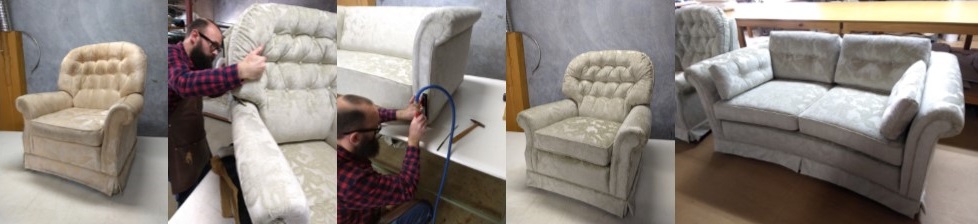
    Our client in her late 80’s approached us to rejuvenate her rocker glider chair and we just loved her story. As a young child in the pre-war years she travelled from her home in Rugby England with her father by train to Edinburgh Scotland to visit her grandmother. Apparently her grandmother had very strict house rules however when she had the chance she would love to rock in her grandmother’s chair. A few years later after the passing of her grandmother her aunty asked if she would like any of her grandmother’s possessions with the obvious response, “the rocking chair”. Then some eighty years later we were given the task of reupholstering her special chair.

    Our client had selected an olive cut pile cotton velvet for the upholstery which suited the chair and reflected the era. All the upholstery was removed from the chair then the timber frame was cleaned and polished. Jute webbing was fitted over the seat and then a hessian overlay and premium padding with a polyester overlay. After the outside back was fitted the same process as the seat occurred then the arms pads were built up with premium padding and polyester overlays. The inside back, seat and arm pads were then upholstered and unlike the original chair which was trimmed with gimp we used self-covered banding which was then space studded.

    When the chair was delivered our client had tears of joy saying this was something she had wanted to do all her life.

    Call us Today