Antique Chairs/Sofas

  • Bedroom Chair (Slipper Chair) – Restoration

    upholstered slipper chair

    Bedroom Chair (Slipper Chair) Restoration

    Bedroom chairs, also known as a bedroom slipper chair, date back to 18th Century Europe. The armless upholstered chair with short legs was designed for women’s dressing rooms out of necessity. Since Victorian women often wore restrictive layers of clothing, tight corsets with wide petticoats they tended to require assistance when slipping on their shoes. More modern versions of the slipper chairs evolved over time remaining in fashion until the 1950’s. 

    Our client approached us saying she had rescued an old chair from her grandmother’s house which had originally belonged to her great grandparents. Upon inspection of the chair it was a bedroom chair or more appropriately a ‘ vintage slipper chair’ and judging from the art-deco design most probably made in the 1930’s.

    We understand that there is interest in how to upholster a slipper chair. This is the process that was followed. We removed the existing upholstery covering on the ladies slipper chair. A once superb abstract floral velvet with a flange cord trim. This revealed a Jarrah timber frame in good condition and like most locally made upholstered furniture of the era the main frame was dowelled with the cosmetic frame components nailed. The timber frame was carefully knocked apart, glued with a superior PVA then screwed together.

    The upholstery started with fitting jute webbing then lacing coil springs, tying down the springs and fitting hessian overlays. Synthetic edge moulding was used to form the foundation of the upholstered edges then fabricated various layers of premium polyurethane that were laminated over the seat top and inside back to create the necessary upholstered structure including flute detail. Bonded polyester fibre was then used as a final layer to provide the necessary finish when upholstered.

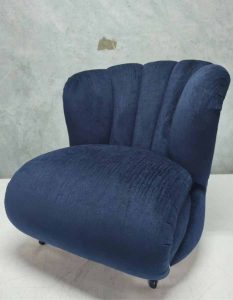
    A traditional chenille was selected for the upholstery covering with a contrast fabric from the same range for piping. The upholstery techniques combined traditional and contemporary methods with the foundation period authentic but with a modern touch to the finish. The back flutes were channelled into the foam/polyester with the upholstery laced to the hessian foundation providing greater comfort than the original. Likewise the seat was still firm but well-padded and even compared with the old flock and fibre techniques. The outside back panel was lined and padded with the contrast piping highlighting the art-deco detail.

    The result spoke for its self with our client happy that her Nan’s upholstered slipper chair would now look in place at her home while retaining the family history.

    • We are delighted with the outcome

      Cleaning out my Nan’s house recently after she passed away we found an old chair that was in pretty poor condition. Believing that it had potentially belonged to our Nan’s parents we decided to get it refurbished and keep it in the family.
       
      We rang Frank at Parker Interiors to get his opinion. Dealing with Frank was a pleasure, he was very knowledgeable and very helpful when it came to choosing what materials to use. Frank explained what options would be best to keep the authenticity of the chair.
       
      We are delighted with the outcome and love the look of the new chair. Frank was even able to tell us that it was originally made in Perth sometime in the 1930’s.
      Ronni
      Salter Point W.A.
  • Turn of The Century Decorative Chaise Lounge

    Chaise Reupholster Perth

    A Background to the Art Deco Period of Britain

    This decorative chaise was made in England during the first decade of the 20th Century. It is generally thought that the Art Deco period was from 1920 – 1940. However preceding this period from about 1880 there were the Aesthetic and Arts and Crafts Movements in Britain. The ethos of the design was to borrow concepts from the past and modernise them. As a result this time frame in furniture design is generally referred to as the start of the Modernist Design era.

    The History of the Chaise Lounge

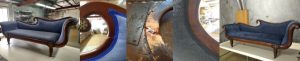
    This decorative chaise lounge was constructed from mahogany with decorative brass inlays. However it had been poorly restored. Under instruction from our clients we stripped the upholstery back to the frame and properly repaired the fractured shaped timber rail using two-pack resin.

    The Reupholstery Process

    The process we undertook for the reupholstery was:

    • to strip the existing polish which had previously been stained Jarrah with a gloss finish
    • relacquer the show-wood with a natural finish in a low sheen and
    • reupholstered the chaise fitting it with new jute webbing, lacing coil springs then a hessian overlay

    Our clients had a restricted budget so we then laminated firm premium cushioning over the tied hessian which gave an authentic finish and we are sure would be approved by the Modernists during its original construction. The fabric and gimp we selected were in keeping with the era. It gave a Modernist touch to the furniture keeping it reasonably authentic.

    Our Clients Loved It!

    Our clients loved the finished piece in their turn of the century home and we trust they will enjoy living with this furniture for many years into the future.

    Click here to see more of our reupholstery projects

    Call us Today to Have Your Chaise Reupholstered
  • Early surviving furniture in W.A. (pre 1842)

    Perth recover antique furniture

    Furniture From The South West of Western Australia

    What Happens When You Reupholster Furniture Many Times?

    This furniture had previously been re-upholstered four times with the integrity of the finish increasingly compromised over the years. We were given the task of stripping the furniture completely back and restoring to its bygone glory days.

    How We Restored This Antique Furniture

    https://www.parkerinteriors.com.au/re-uphoster/We took extra care and slowly worked on these precious pieces of furniture to restore them to their former glory. This process included:

    • Stripping all the upholstery to the bare frames
    • Minimal structural repairs as the internal frames were in amazing condition which is an incredible testament to those who made this furniture over 175 years ago
    • Fitting new heavy weight jute webbing,
    • Lacing in new coil springs
    • Then covering with hessian
    • Creating a new stitched edge
    • Laminating with a layer of premium padding and polyester
    • Fitting the inside backs with new jute webbing and hessian
    • Laminating with a layer of premium cushioning and polyester to provide a smooth finish
    • Deep buttoning was marked out on both the prepared pieces of furniture and the cut pile velvet
    • Upholstering with the buttoning traditionally vandyked and
    • Padding of the outside backs/arms whilst finishing with gimp edging

    Our clients were amazed with the result and plan to pass this furniture to their children for the future generations to enjoy

    .

    Call us Today for Quality Antique Furniture Reupholstery