Jardan Reupholster

By Frank Parker

Jardan owned by brothers Nick & Michael Garnham commenced operations in 1987 from humble beginnings having eight staff by 1997 with over one hundred and seventy employed today.  All furniture is custom-made in a modern equipped factory located in Melbourne with retail outlets now in Brisbane, Sydney, Melbourne and Perth.

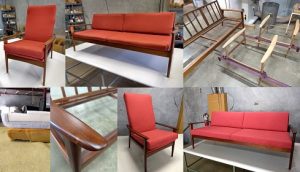
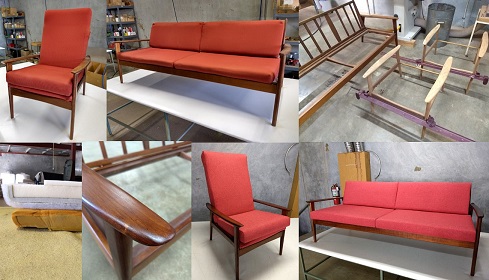
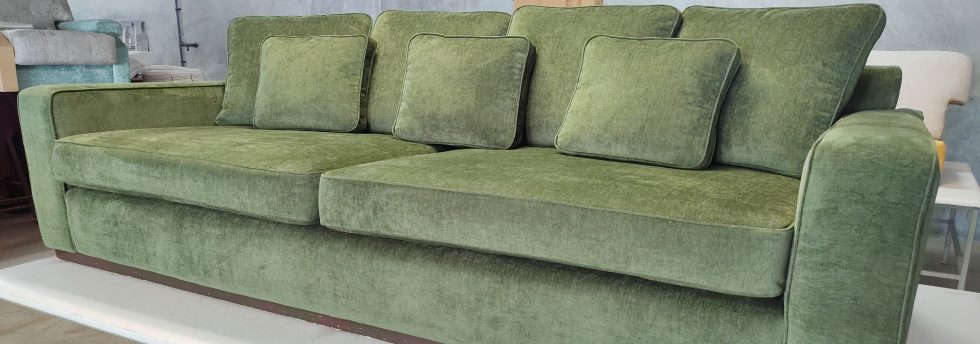
A client approached us saying they had purchased a Jardan 3 seater settee when their children were just toddlers now their children are young adults and the settee has served them well but was in desperate need re-upholstery. Our clients were true patriots as they also selected an Australian made fabric for the re-upholstery.

We removed all existing upholstery from the timber frame and the only casualty from almost two decades of heavy use was one broken spring which shows the value of purchasing high quality Australian made furniture. We laminated new high density foam to the frame body and fabricated polyester filled channelled and quilted back cushion inserts and polyester encased premium foam seat cushion inserts. The settee was then re-upholstered with the outside arms and back lined and padded with piped detail.

Our clients were glad they had made the correct decision in having their settee re-upholstered in a quality Australian made fabric, it should be good for another two decades and the grandchildren.
Similar Posts

  • Oliver’s Upholstery

    Oliver’s Upholstery was founded by Andrew Oliver in the late 1980’s being situated in Perth Western Australia. The business manufactured economically priced upholstered furniture for the WA retail sector. The business grew quickly becoming one of the larger upholstery manufacturers by volume in the State. However about a decade of operation cheap inferior products started coming into Australia from Malaysia and Thailand then flooding in from China.

    With the value area of the local market being displaced with imported furniture Andrew Oliver changed directions renaming the business Oliver’s Re-upholstery focusing on re-upholstery and commercial upholstery.

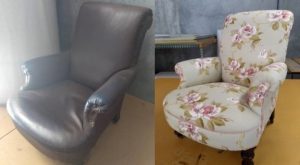
    Long term clients approached us when renovating their home wanting to have two wing back chairs re-upholstered. These clients resided in a leafy Perth suburb and thought the chairs were rather special but it’s difficult to explain to such clients that their taste in furniture maybe a bit ordinary, especially if they want the chairs re-upholstered in a high quality leather.

    The upholstery was rather tacky so we stripped the chairs back to the bare frames and were rather surprised that the frames were soundly constructed. We sprung the frames, laminated the body work with high density foam padding slightly redesigning the upholstery. The leather was a full-aniline leather from Tasman Tanning and was a pleasure to use as the chairs took shape. Using more traditional labour intensive upholstery techniques paid off as displayed by the finished product.

    Our clients were simply “gob-smacked” with their re-upholstered wing back chairs which just goes to show that you can make a silk purse from a sow’s ear!

    Call us Today
  • Le Cornu Furniture – reupholster

    Le Cornu was an iconic South Australian furniture manufacturing and retailing business. Operations commenced in 1861 when Phillip Le Cornu started a wholesale cabinet making business in Adelaide. In 1885 the factory was largely destroyed by fire and recommenced operations at a former church in North Adelaide. In 1921 the founder died and his son Phillip took over the business expanding operations and by 1924 employed 25 people.

    In 1954 the business went factory direct with a diversified range of furniture and over the next two decades expanded retail stores in S.A and Darwin. In 1989 the North Adelaide store was closed and then the business was sold to Fantastic Holdings in 2008.

    Our client approached us wanting to re-upholster a settee purchased by his parents from Le Cornu in 1959. This settee was the surviving piece of the lounge suite which he grew up with and lounged upon as a teenager. It was still upholstered in the original fabric being a ribbed velvet which would have been the latest trend at the time of purchase.

    We removed all the existing upholstery from the settee frame and it was well constructed with little structural work required. The frame was re-sprung with heavier gauge no-sag springs on the seat and the back springs were replaced with the same gauge. The springs were linked, outside arms and back were lined with hessian and high density body work padding applied. The original cushion inserts were latex and these were replaced with polyester encased premium cushions. The two seater settee was then upholstered to its original finish in a ribbed Zepel gold velvet.

    Our client was gobsmacked upon delivery of the settee saying it was just as he remembered it as a child growing up in Adelaide.

    Call us Today
  • Reupholster Art Deco Chairs

    From our understanding these chairs were made in Czechoslovakia in the late 1920’s, manufacturer unknown. For their time the construction techniques used are quite advanced utilising a ‘push-in seat’ and back flutes located with spring-edge wire. However the most significant thing about these chairs is the general proportion and balance of the design.

    A client contacted us saying that she had acquired two art deco European chairs requiring restoration. Upon initial inspection we found the chairs had been shabbily re-upholstered and covered in decades of grime. As we stripped away the fabric on these chairs it exposed some of the original upholstery providing enough information for an authentic reconstruction.

    The first step was several construction repairs to the timber frames then removing the layers of grime. The show-wood components of the frames were then gently sanded back, stained a mid-tone Oak then three coats of clear lacquer. Then with the upholstery we re-constructed the sprung edge seats and backs by lacing in the springs, fabricated the spring edge wire and tying down the springs. We then sewed on the hessian overlays and ring-clipped on polyurethane edge moulding. The seats and backs were then layered with premium foam and polyester overlays. The client’s fabric selection suited the chairs and was practical to upholster. The panels were cut being carefully pattern matched then largely pre-sewn but requiring some hand stitching.

    The re-furbishing of these chairs combined traditional methods with modern materials however did not compromise the design integrity. Our client was overjoyed with the result and the chairs now take pride of place in her lounge room.

    Call us Today
  • Re-furbish Library chairs

    Upholstered library chairs

    The History of These Upholstered Library Chairs (William IV Chairs)

    A set of two leather look library chairs were presented to us by a gentleman who wanted them rejuvenated. These chairs were purchased new in the 1920’s by his grandfather in England. “Library” chairs also referred to as “William IV” chairs were initially constructed in the 1830’s thus this design of chair had already been in circulation for almost a century.  

    Library Chair Details

    These chairs were constructed from English Oak and traditionally upholstered in a tapestry fabric. They had then been re-upholstered in the 1970’s using a Nylex vinyl named “Deerhide”. Deerhide was a product of its day and although extremely popular, perhaps these chairs deserved to be covered in something slightly more elegant.

    How We Beautifully Restored These William IV Chairs

    We stripped these well worn chairs completely back then cleaned and polished the elegant carved timber frames. We used the original upholstery methods. This included jute webbing, coil springs and stitched edges and indulged in a final thin layer of premium foam. The upholstery was also finished to the original standard with space studded self-covered banding.

    This resulted in this pair of two library chairs being brought back to their former glory and a very happy owner.

    Call us Today To Have Your Precious Furniture Restored
  • Reupholster to Modernise

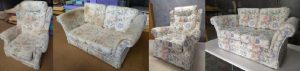
    Clients approached us as they had shifted from an older traditional styled house into a new modern mid-century styled home located in the Perth hills. They had a much loved traditional Torrance & McKenna lounge suite consisting of 2 x wing back chairs and a low back 4 seater settee. They wanted to retain this lounge furniture but re-upholster it to suit their new home.

    The most important aspect of this process is to select an appropriate fabric for the re-upholstery process. Our clients had two issues to consider, the upholstery fabric selected had to suit their existing lounge furniture while looking in place in a new mid-century styled home. The upholstery fabric selected fulfilled the criteria being an abstract floral design with the blue and autumn tones looking effective on the polished concrete floor and picking up the tones of the timber cabinetry.

    This job was a complete re-build so we removed all the existing upholstery. The frame was re-webbed with heavy weight jute webbing and the coil springs laced into place then the sprung edges constructed. New high density foam padding was laminated to the frame bodies with the upholstery back to original including lined and padded outside arms and backs. The cushion inserts were fabricated using premium foam and then encased with bonded polyester fibre. The cushions were upholstered back to the original finish being boxed piped seats and centre piped back and arm cushions.

    The result spoke for its self and our clients were ecstatic when their re-upholstered furniture was delivered. This is great example of up-cycling fine furniture which was purchased new 45 years ago and is now good for another 45 years.

    Call us Today
  • Why do modern sprung cushions have problems?

    cushion upholstery Perth

    What are contemporary sprung cushions?

    Contemporary sprung cushions have been marketed over the last decade as a superior concept however there are major issues regarding the effectiveness of using ‘spring pockets’ in the fabrication of seat cushion inserts.

    How are traditional spring cushions different to modern spring cushions?

    Traditional sprung cushions were constructed using mid-gauge coil springs and hand sewn into a hessian case then encased with flock and fitted into a box piped seat cushion with sewing usually finished by hand stitching. Seat cushions constructed this way tend to stand the test of time as is evident by cushions still used in antique furniture.

    However the fabrication of modern sprung cushion inserts utilise light-gauge coil springs encased in a series of thin polyester pockets which are normally referred to as ‘spring pockets’. These spring pockets are placed in the centre of the cushion inserts and sandwiched with polyurethane foam then usually encased with polyester fibre. With moderate to heavy use the spring pockets tend to distort with the springs often fracturing the casings. The result is a distorted and uncomfortable seat cushion and maybe a costly repair bill outside the warranty period.

    What about the option of premium quality foam cushions?

    The sales personnel promoting the “advantages” of sprung cushions usually infer by definition that the base is also sprung but most sprung cushions are on bases fitted with elastic webbing. The truth is that there is nothing wrong with a settee base correctly fitted with high quality elastic webbing. However a superior cushion insert can be effectively achieved by simply using premium quality polyurethane foam encased in polyester fibre and no spring pockets!

    Call Us To Help You With the Cushions on Your Furniture